|
A Discrete-Event Network Simulator
|
API |
|
|
A Discrete-Event Network Simulator
|
API |
The application of the sensor node. More...
#include "sensornode.h"
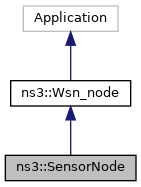
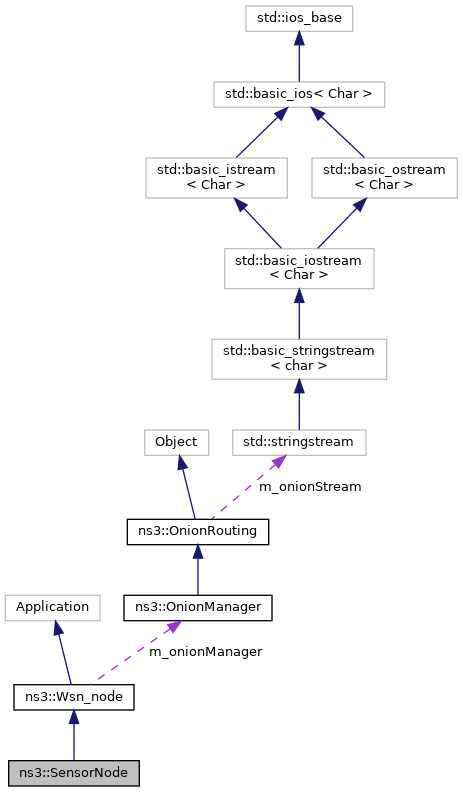
 Inheritance diagram for ns3::SensorNode: Collaboration diagram for ns3::SensorNode:
Public Member Functions | |
| SensorNode () | |
| Default constructor. More... | |
| virtual | ~SensorNode () |
| Default destructor. More... | |
| void | Accept (Ptr< Socket > socket, const ns3::Address &from) |
| Accept new TCP connections. More... | |
| uint32_t | DeserializeIpv4ToInt (uint8_t *buff) |
| Convert an IPV4 address given as a buffer. More... | |
| void | ProcessOnionBody (protomessage::ProtoPacket_OnionBody *onionbody) |
| If the onion body contains the aggregated value, then aggregate the sensor (dummy) value to the value carried in the onion body. More... | |
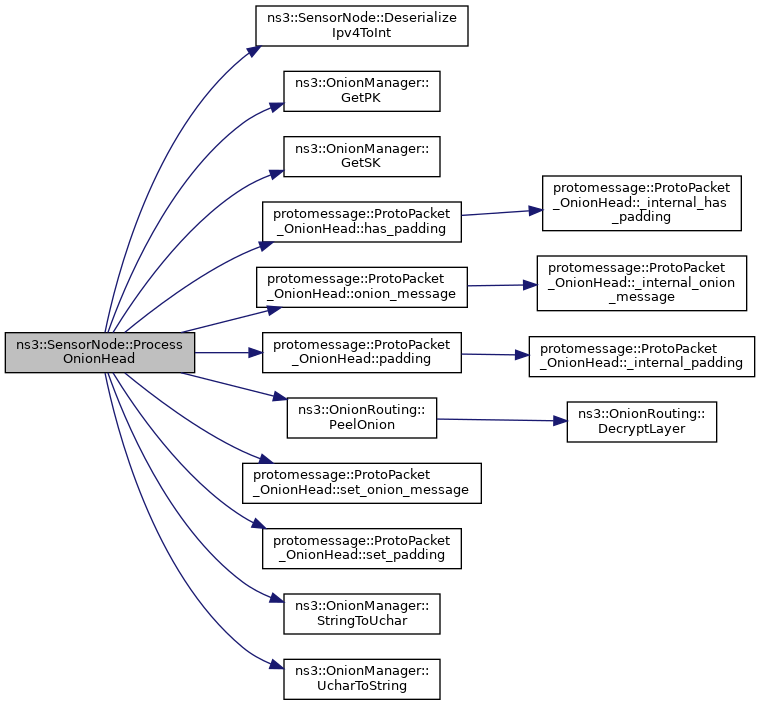
| uint32_t | ProcessOnionHead (protomessage::ProtoPacket_OnionHead *onionHead) |
| Decrypt the outer layer of the onion head, obtain the information of the next IP address, reasemble the onion head by including padding if required. More... | |
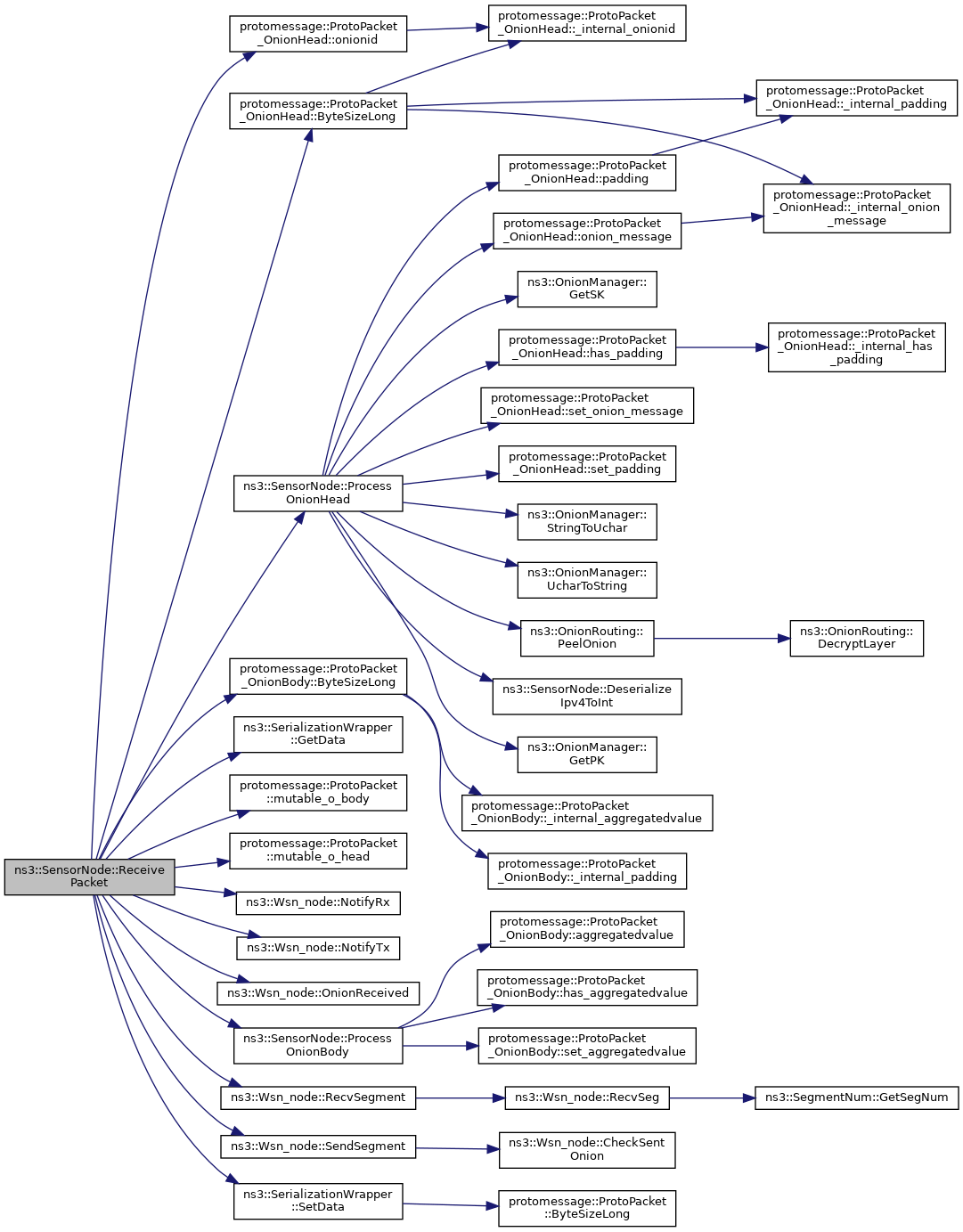
| void | ReceivePacket (Ptr< Socket > socket) |
| Executed when a new onion is received. More... | |
| Public Member Functions inherited from ns3::Wsn_node | |
| Wsn_node () | |
| Default constructor. More... | |
| void | ActivateNode () |
| The method re-activates a node that was disabled using the DisableNode() method. More... | |
| void | CheckSentOnion (int count) |
| The method checks if the onion was received by the next receiving node If the onion was not received then abort the current onion and schedule the sending of another onion with equal parametrs as the aborted onion. More... | |
| void | Configure (void) |
| 1. More... | |
| void | DisableNode () |
| The method disables the node. More... | |
| uint32_t | getNodeDelay (Ipv4Address node_address) |
| compute when the node should start the handshake process from the node ip address Used to not generate a network congestion if all nodes will strat the handshake at the same time More... | |
| void | NodeDegree (double coord_x, double coord_y) |
| Retrieve the degreee this node from the OLSR routing protocol. More... | |
| void | NotifyRx (Ptr< const Packet > packet) |
Call to signal the receipt of a Packet at the application layer. More... | |
| void | NotifyTx (Ptr< const Packet > packet) |
Call to signal the transmission of a Packet at the application layer. More... | |
| void | OnionReceived (void) |
| Signal to the ns3::OnionValidator that the onion was corrctly received. More... | |
| Ptr< Packet > | RecvSeg (Ptr< Socket > socket, Ptr< Packet > p, Address from) |
| method for receiving packets able to merge segment fragments if a packet was split into multiple segments due to being larger than the MSS Use the packet tag, to merge packet fragments into a single packet. More... | |
| Ptr< Packet > | RecvSegment (Ptr< Socket > socket) |
| method for receiving a segment calls ns3::Wsn_node::RecvSeg() More... | |
| Ptr< Packet > | RecvSegment (Ptr< Socket > socket, Address &from) |
| method for receiving a segment calls ns3::Wsn_node::RecvSeg() More... | |
| void | SendSegment (InetSocketAddress remote, Ptr< Packet > packet, bool b_onion) |
| Send a packet through a TCP connection to the remote address. More... | |
Static Public Member Functions | |
| static TypeId | GetTypeId (void) |
| Register this type. More... | |
| Static Public Member Functions inherited from ns3::Wsn_node | |
| static TypeId | GetTypeId (void) |
| Register this type. More... | |
Private Member Functions | |
| void | Handshake (void) |
| Construct a new protobuf object containing the node publickey and send it to the sink node. More... | |
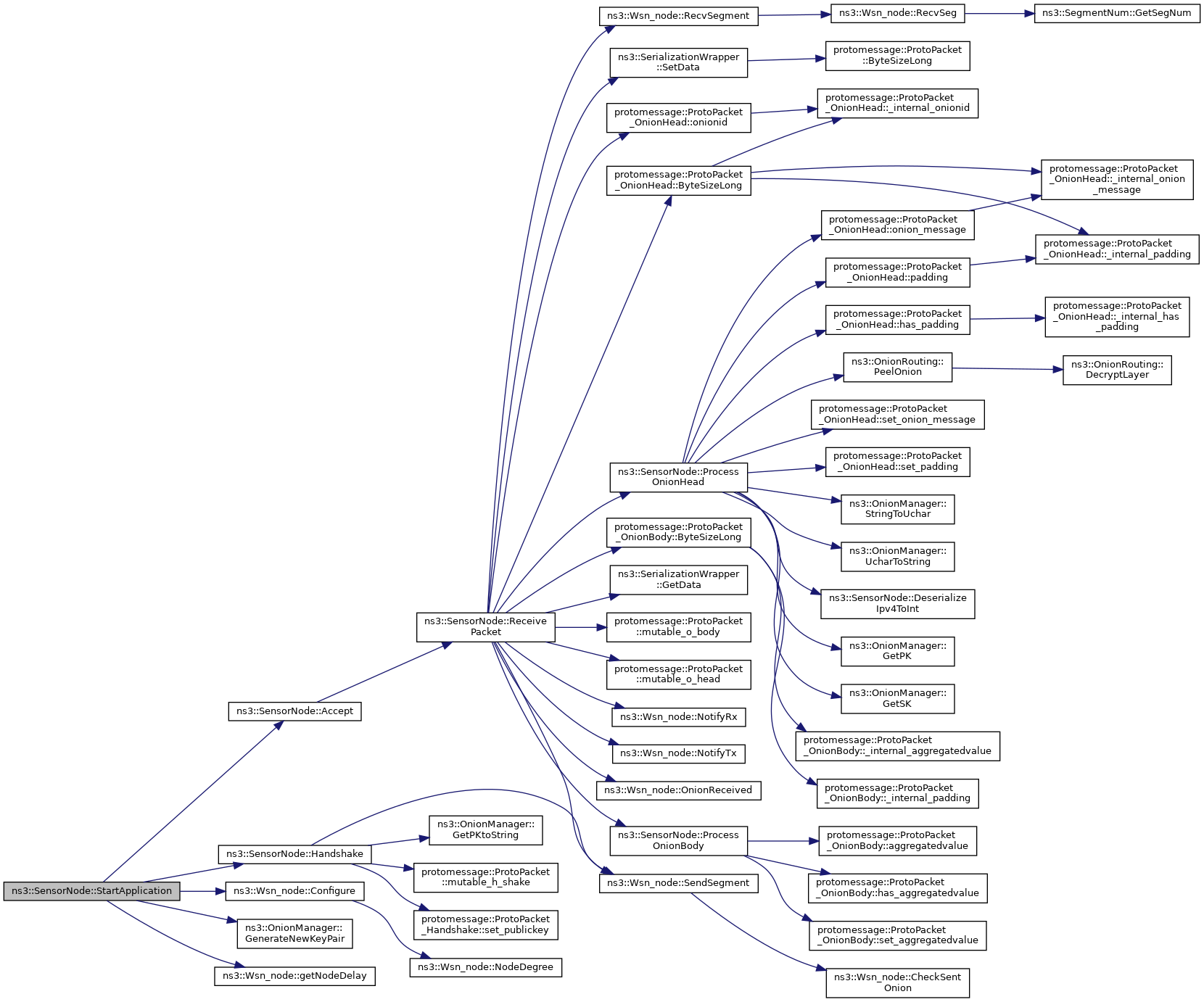
| virtual void | StartApplication (void) |
1.Start the application run ns3::Wsn_node::Configure() 2.Generate new encryption keys 3.Schedule the execution of ns3::SensorNode::Handshake() after delay milliseconds, the delay is computed based on the node ip address 4.Set callback at new socket connection More... | |
| virtual void | StopApplication (void) |
| Stop the application. More... | |
Private Attributes | |
| uint32_t | m_sensorValue = 20 |
| dummy reading of a sensor equipped on the node More... | |
| Ipv4Address | m_sinkAddress |
| address of the sink node More... | |
Additional Inherited Members | |
| Protected Attributes inherited from ns3::Wsn_node | |
| uint16_t | f_mss |
| maximum segment size More... | |
| Ptr< Packet > | f_pendingPacket |
| pointer to the packet where received segment fragments are stored More... | |
| Ipv4Address | f_receivingAddress = Ipv4Address::GetAny () |
| the receiving address More... | |
| int | f_segmentSize |
| the size of the whole packet More... | |
| Ipv4Address | m_address |
| ns3::Ipv4Address of this node More... | |
| TracedCallback< Ptr< const Packet > > | m_appRx |
| traced callback for packet receipt More... | |
| TracedCallback< Ptr< const Packet > > | m_appTx |
| traced callback for packet transmission More... | |
| uint16_t | m_delay |
| delay after which the handshake process will start More... | |
| OnionManager | m_onionManager |
| The ns3::OnionManager object. More... | |
| uint16_t | m_onionTimeout |
| timer in seconds, if elepsed and the onion was not recieved by the next receiver, then delete the onion More... | |
| Ptr< OnionValidator > | m_onionValidator |
| Pointer to the ns3::OnionValidator. More... | |
| Ptr< OutputManager > | m_outputManager |
| Pointer to the ns3::OutputManager. More... | |
| uint16_t | m_port |
| port of the application More... | |
| Ptr< Socket > | m_socket |
| listening socket More... | |
| int | o_hopCount = 0 |
| track how the onion is is transiting in the network More... | |
| int | o_sequenceNum = 0 |
| sequence number of the onion, should be same as onion_id More... | |
The application of the sensor node.
Definition at line 46 of file sensornode.h.
| ns3::SensorNode::SensorNode | ( | ) |
Default constructor.
Definition at line 45 of file sensornode.cc.
|
virtual |
Default destructor.
Definition at line 49 of file sensornode.cc.
References ns3::Wsn_node::m_socket.
| void ns3::SensorNode::Accept | ( | Ptr< Socket > | socket, |
| const ns3::Address & | from | ||
| ) |
Accept new TCP connections.
| [in] | socket | |
| [in] | from | sending address |
Definition at line 207 of file sensornode.cc.
References ReceivePacket().
Referenced by StartApplication().
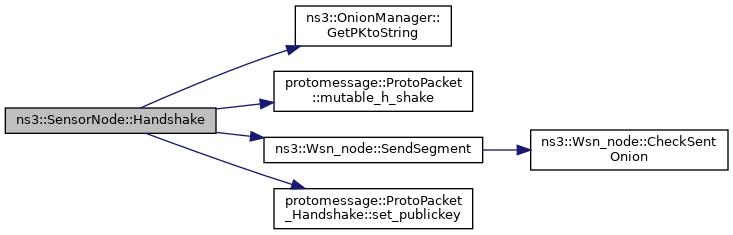
Here is the call graph for this function: Here is the caller graph for this function:| uint32_t ns3::SensorNode::DeserializeIpv4ToInt | ( | uint8_t * | buff | ) |
Convert an IPV4 address given as a buffer.
| [in] | buff | pointer to an array containing an IpV4 address |
Definition at line 192 of file sensornode.cc.
Referenced by ProcessOnionHead().
Here is the caller graph for this function:
|
static |
Register this type.
Definition at line 32 of file sensornode.cc.
References m_sinkAddress.
|
private |
Construct a new protobuf object containing the node publickey and send it to the sink node.
Definition at line 57 of file sensornode.cc.
References ns3::OnionManager::GetPKtoString(), ns3::Wsn_node::m_onionManager, ns3::Wsn_node::m_port, m_sinkAddress, protomessage::ProtoPacket::mutable_h_shake(), ns3::Wsn_node::SendSegment(), and protomessage::ProtoPacket_Handshake::set_publickey().
Referenced by StartApplication().
Here is the call graph for this function: Here is the caller graph for this function:| void ns3::SensorNode::ProcessOnionBody | ( | protomessage::ProtoPacket_OnionBody * | onionbody | ) |
If the onion body contains the aggregated value, then aggregate the sensor (dummy) value to the value carried in the onion body.
| [in] | onionBody | pionter to the protobuf object holding informations of the onion body |
Definition at line 178 of file sensornode.cc.
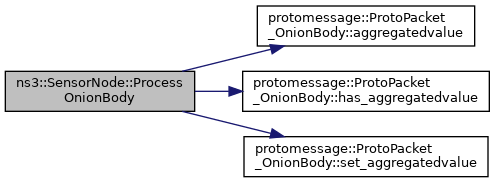
References protomessage::ProtoPacket_OnionBody::aggregatedvalue(), protomessage::ProtoPacket_OnionBody::has_aggregatedvalue(), m_sensorValue, and protomessage::ProtoPacket_OnionBody::set_aggregatedvalue().
Referenced by ReceivePacket().
Here is the call graph for this function: Here is the caller graph for this function:| uint32_t ns3::SensorNode::ProcessOnionHead | ( | protomessage::ProtoPacket_OnionHead * | onionHead | ) |
Decrypt the outer layer of the onion head, obtain the information of the next IP address, reasemble the onion head by including padding if required.
| [in] | onionHead | pionter to the protobuf object holding informations of the onion head |
Definition at line 136 of file sensornode.cc.
References DeserializeIpv4ToInt(), ns3::OnionManager::GetPK(), ns3::OnionManager::GetSK(), protomessage::ProtoPacket_OnionHead::has_padding(), ns3::orLayer::innerLayer, ns3::orLayer::innerLayerLen, ns3::Wsn_node::m_onionManager, ns3::orLayer::nextHopIP, protomessage::ProtoPacket_OnionHead::onion_message(), protomessage::ProtoPacket_OnionHead::padding(), ns3::OnionRouting::PeelOnion(), protomessage::ProtoPacket_OnionHead::set_onion_message(), protomessage::ProtoPacket_OnionHead::set_padding(), ns3::OnionManager::StringToUchar(), and ns3::OnionManager::UcharToString().
Referenced by ReceivePacket().
Here is the call graph for this function: Here is the caller graph for this function:| void ns3::SensorNode::ReceivePacket | ( | Ptr< Socket > | socket | ) |
Executed when a new onion is received.
Repeatedly call ns3::Wsn_node::RecvSegment() until the whole packet is received. Then, check if the onion is valid by comparing the onionID of the onion and the onion sequence number in the ns3::OnionValidator::GetOnionSeq(). If the onion is not valid then delete the onion. Otherwise: Signal that the onion was received. Process the onion head and retrieve the next hop ip value. (ns3::SensorNode::ProcessOnionHead()) Processs the onion body. (ns3::SensorNode::ProcessOnionBody()) Send the onion meesage to the next hop ip.
| [in] | socket | the incoming connection |
Log details about the onion
Definition at line 79 of file sensornode.cc.
References protomessage::ProtoPacket_OnionHead::ByteSizeLong(), protomessage::ProtoPacket_OnionBody::ByteSizeLong(), ns3::SerializationWrapper::GetData(), ns3::Wsn_node::m_address, ns3::Wsn_node::m_onionValidator, ns3::Wsn_node::m_outputManager, ns3::Wsn_node::m_port, protomessage::ProtoPacket::mutable_o_body(), protomessage::ProtoPacket::mutable_o_head(), ns3::Wsn_node::NotifyRx(), ns3::Wsn_node::NotifyTx(), ns3::Wsn_node::o_sequenceNum, protomessage::ProtoPacket_OnionHead::onionid(), ns3::Wsn_node::OnionReceived(), ProcessOnionBody(), ProcessOnionHead(), ns3::Wsn_node::RecvSegment(), ns3::Wsn_node::SendSegment(), and ns3::SerializationWrapper::SetData().
Referenced by Accept().
Here is the call graph for this function: Here is the caller graph for this function:
|
privatevirtual |
1.Start the application run ns3::Wsn_node::Configure() 2.Generate new encryption keys 3.Schedule the execution of ns3::SensorNode::Handshake() after delay milliseconds, the delay is computed based on the node ip address 4.Set callback at new socket connection
Reimplemented from ns3::Wsn_node.
Definition at line 214 of file sensornode.cc.
References Accept(), ns3::Wsn_node::Configure(), ns3::OnionManager::GenerateNewKeyPair(), ns3::Wsn_node::getNodeDelay(), Handshake(), ns3::Wsn_node::m_address, ns3::Wsn_node::m_onionManager, and ns3::Wsn_node::m_socket.
Here is the call graph for this function:
|
privatevirtual |
Stop the application.
Reimplemented from ns3::Wsn_node.
Definition at line 232 of file sensornode.cc.
References ns3::Wsn_node::m_socket.
|
private |
dummy reading of a sensor equipped on the node
Definition at line 162 of file sensornode.h.
Referenced by ProcessOnionBody().
|
private |
address of the sink node
Definition at line 160 of file sensornode.h.
Referenced by GetTypeId(), and Handshake().
 1.8.17